
A Guide for New & Returning Canskate Families!
Whether you're brand new to skating or returning for another season, we've put together some helpful information to make getting ready for the ice a little easier.
For our newest skaters and families, you'll also find information about what to expect during your first few sessions.
Returning families may find the equipment, communication and rink reminders helpful as we get ready for another great season.
New to skating? Start with CanSkate!
CanSkate is Skate Canada's learn-to-skate program and the starting point for beginners of all ages.
Skaters learn the basic skills of balance, control and agility that provide the foundation for all ice sports, including figure skating, hockey, ringette and recreational skating.
No previous skating experience is required!
Our CanSkate sessions are led by Skate Canada professional coaches with the help of our fantastic team of Program Assistants.
BEFORE THE PROGRAM BEGINS
Communication
QCB sends important program information, including schedules, session details, reminders and changes, by email. We strongly recommend staying opted in to QCB emails through your Uplifter account so you don't miss important information throughout the season.
Have questions?
If you're new to QCB or have questions about your program, registration, equipment or what to expect, please reach out: qcbboard@gmail.com
GETTING READY FOR THE RINK
Whether your skater has been on the ice for years or is getting ready for their very first session, it's a good idea to check their equipment before the season begins.
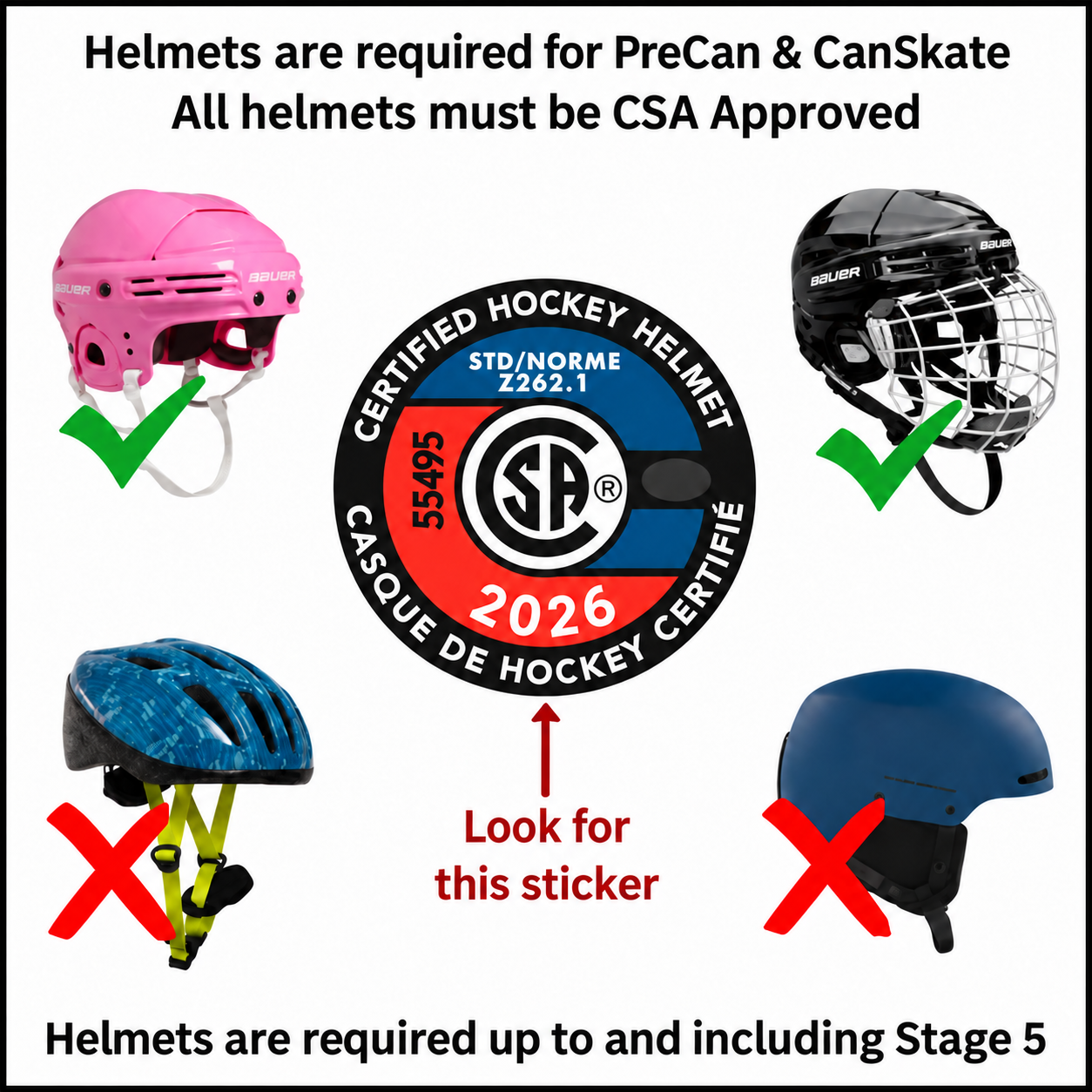
Helmet
|
|
|
GETTING READY FOR THE ICE
A Guide for New & Returning Canskate Families!
Whether you're brand new to skating or returning for another season, we've put together some helpful information to make getting ready for the ice a little easier.
For our newest skaters and families, you'll also find information about what to expect during your first few sessions.
Returning families may find the equipment, communication and rink reminders helpful as we get ready for another great season.
New to skating? Start with CanSkate!
CanSkate is Skate Canada's learn-to-skate program and the starting point for beginners of all ages.
Skaters learn the basic skills of balance, control and agility that provide the foundation for all ice sports, including figure skating, hockey, ringette and recreational skating.
No previous skating experience is required!
Our CanSkate sessions are led by Skate Canada professional coaches with the help of our fantastic team of Program Assistants.
BEFORE THE PROGRAM BEGINS
Communication
QCB sends important program information, including schedules, session details, reminders and changes, by email. We strongly recommend staying opted in to QCB emails through your Uplifter account so you don't miss important information throughout the season.
Have questions?
If you're new to QCB or have questions about your program, registration, equipment or what to expect, please reach out: qcbboard@gmail.com
GETTING READY FOR THE RINK
Whether your skater has been on the ice for years or is getting ready for their very first session, it's a good idea to check their equipment before the season begins.
Helmet
|
|
|
Gloves or mittens
All skaters should wear gloves or mittens for warmth and to protect their hands. Fleece or wool are good choices. Fuzzy or chenille mittens are NOT permitted. Their texture can make it difficult for skaters to safely push themselves up from the ice, and the fibres they shed can also be left behind on the ice and create a hazard for other skaters.
What should my skater wear?
Our rink is generally warm, and skaters can heat up quickly once they start moving.
Dress your skater in comfortable, lightweight layers that allow them to move freely. Splash pants or lightweight athletic pants are a great option, particularly for newer skaters who may spend a little more time sitting, kneeling or getting back up from the ice.
We do not recommend bulky jackets, heavy snow pants or other thick winter clothing for skating. These can restrict movement and make learning more difficult. Avoid loose scarves, long drawstrings or other clothing that could interfere with movement or become a safety concern.
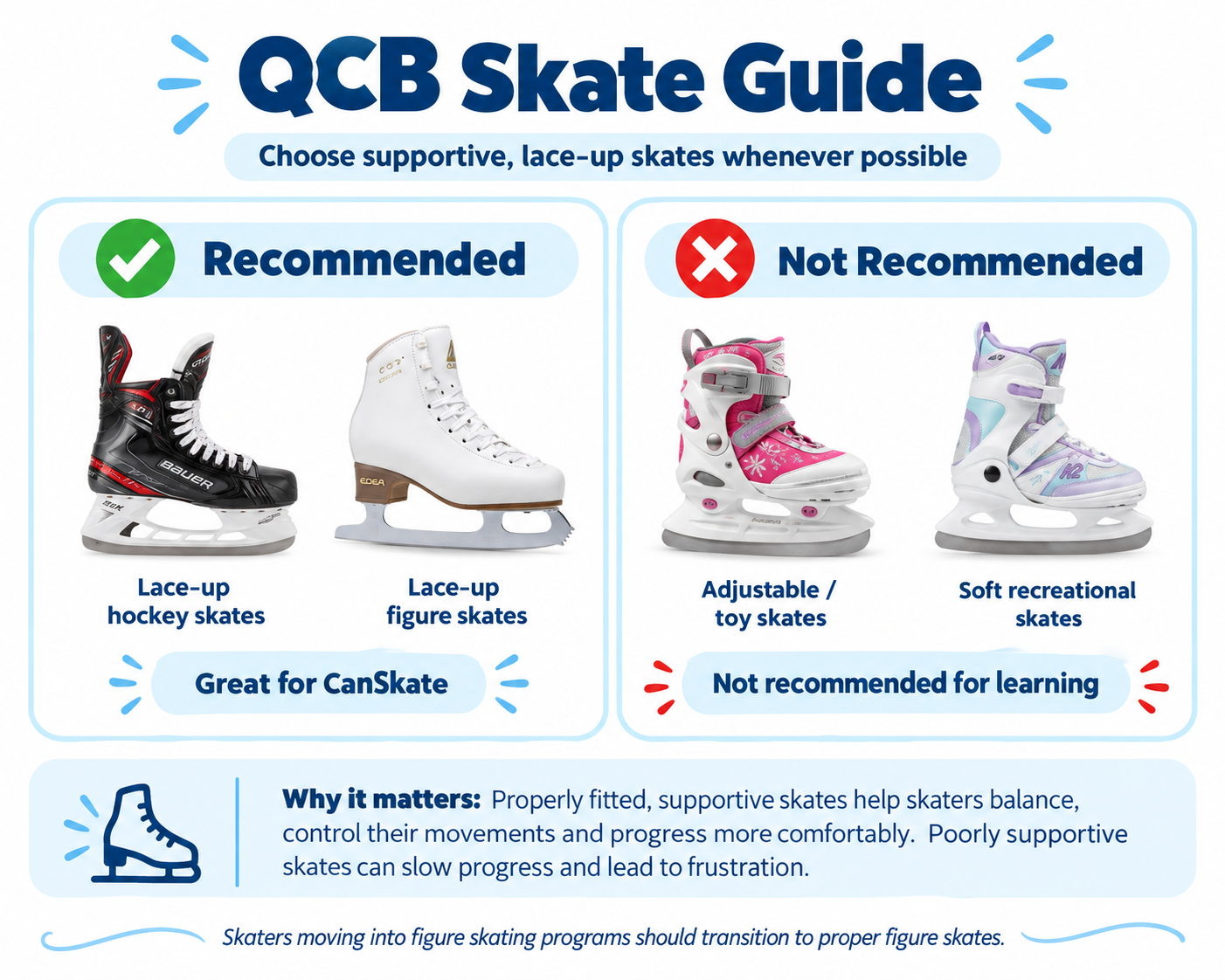
Skates
Properly fitted and maintained skates can make a huge difference in a skater's ability to balance, learn and progress.
For a new skater, good support and control are especially important. A skate that doesn't fit or support the foot properly can make it much harder to balance, control movements and develop new skills. When a skater is struggling because their equipment isn't supporting them properly, learning to skate can feel much harder than it needs to.
We strongly discourage adjustable skates for skaters who are learning. While they may seem convenient for growing feet, they're designed to accommodate a range of sizes rather than provide the precise, supportive fit a beginner needs and can slow a skater's progress and lead to unnecessary frustration, particularly when they're just starting out.
A properly fitted pair of skates doesn't have to be expensive. A good-quality, well-fitting used pair can be a much better choice than a new adjustable pair.
Before the season begins, check that your skates:
- Fit properly and provide good ankle support
- Are laced snugly
- Have properly sharpened blades
- Still fit your growing skater comfortably
Figure skates
Figure skates are designed with toe picks, please do not remove or grind off the toe picks.
Skate guards & blade care
Bring hard skate guards to protect blades while walking anywhere off the ice.
After skating:
-
Wipe the blades completely dry with a soft cloth or towel.
-
Use soft blade covers/soakers for storage and transportation.
-
Allow skates to dry thoroughly between sessions.
Do NOT store skates with hard guards left on the blades. Moisture trapped inside the guards can cause rust.
Skate sharpening
Skate blades should be sharpened regularly by someone experienced in sharpening skating blades. How often they need sharpening depends on how frequently the skater is on the ice, their skating level and the condition of the blades.
WHAT TO EXPECT AT THE RINK
Arrive early
Please arrive 15–20 minutes before your scheduled ice time, especially during the first few sessions.
This gives you plenty of time to get organized, find your dressing room, put on skates and have your skater ready to go on the ice when their session begins.
Stop by the Welcome Table
When you arrive, please stop by the QCB Welcome Table in the lobby to:
- Pick up your skater's name tag
- Get any information or assistance you need
- Check the TV in the lobby for your assigned dressing room
Name tags must be worn during each session. A helper will usually collect name tags at the end of the session. If we happen to miss yours, please drop it off at the Welcome Table on your way out.
THE FIRST FEW CANSKATE SESSIONS
If your child has never skated before, you might be wondering what their first session will actually look like.
Don't worry — they do not need to know how to skate before they arrive!
Skaters are grouped according to their current ability and will work on skills appropriate for where they are starting.
Early skills may include:
- Learning how to fall and get back up safely
- Balance and standing on the ice
- Marching and moving independently
- Beginning to glide
- Learning to stop
- Building confidence moving around the ice
Sessions include plenty of movement, activities and games, with coaches and Program Assistants there to help along the way.
What if my child is nervous?
Completely normal.
Some skaters will head onto the ice without looking back. Others may be hesitant, cry or need several sessions before they feel comfortable.
Every skater is different.
Our coaches and Program Assistants will give them time, encouragement and support while they get used to the ice and their new surroundings.
You may be surprised by how quickly things change once they become familiar with the routine.
PRE-CANSKATE: LEARNING THROUGH PLAY
Pre-CanSkate is designed specifically for our youngest and newest skaters, so it may look a little different from what you picture when you think of a traditional skating lesson.
Skaters may spend time playing games, exploring the ice, practising balance and movement, and developing basic skating skills through fun, age-appropriate activities. You may see them:
- Sitting or kneeling on the ice
- Crawling
- Chasing coaches or Program Assistants
- Pretending
- Playing games
- Blowing bubbles
- Moving around in ways that don't always look like a traditional "lesson"
They're still learning. These activities develop the balance, coordination, confidence and movement skills they need before more advanced skating skills can happen. For our youngest/newest skaters, having fun and becoming comfortable on the ice are important first steps in learning to skate.
PARENTS & THE ICE SURFACE
Parents and guardians are not permitted on the ice or in the players' boxes during regular skating sessions.
Our coaches and Program Assistants are there to support your skater while they're on the ice. If your child falls, please give them a moment to assess the situation and allow our on-ice team to assist. If you're needed, we'll come get you or flag you over.
A parent or guardian must remain at the rink for the duration of the CanSkate session.
PROGRESS & CANSKATE AWARDS
CanSkate isn't about comparing one skater with another. Skaters progress through skills at their own pace and are assessed throughout the program. As skills are achieved, skaters can earn ribbons and badges recognizing their progress in the CanSkate program. Some skills click almost immediately. Others take time, and that's okay.
HELPING YOUR SKATER HAVE A GREAT SEASON
Every skater progresses at their own pace. For a brand-new skater, progress might mean:
- Going onto the ice without a parent
- Standing up independently
- Getting back up after a fall
- Taking their first few steps
- Making it across the ice
- Feeling excited to come back next week
For a returning skater, it might mean learning a new skill, earning a badge, moving to a new level or rebuilding confidence after some time away.
Celebrate progress at every level. Small improvements are worth celebrating, and building confidence and a positive relationship with skating is just as important as mastering the next skill.
ABOUT OUR ON-ICE TEAM
Professional Coaches
Our coaches are Skate Canada professional coaching members who have completed training through Skate Canada's National Coaching Certification Program (NCCP). They plan and lead our CanSkate programming and oversee skater development and assessment.
Program Assistants
Our Program Assistants are current or former skaters who work alongside our coaches during CanSkate. They demonstrate skills, help with activities and circuits, encourage skaters and provide that extra bit of support that can make a big difference, particularly for our newest skaters. They play an important role in making our sessions fun, active, encouraging and welcoming.
A FEW QUICK REMINDERS
- Arrive early — especially during the first few sessions.
- Visit the Welcome Table — pick up your name tag and check the TV for your dressing room.
- Wear your name tag — a helper will usually collect it after the session; if we miss it, drop it at the Welcome Table on your way out.
- Check your skates — proper fit, support and sharpening matter.
- Bring your gloves — every session!
- Don't forget the helmet — a CSA-approved hockey helmet is required for CanSkate skaters through Stage 5.
- Watch your email — important QCB information and changes are sent electronically.
- Every skater is different — give them time to find their feet.
- Most importantly, have fun!
Welcome back, and welcome to QCB!
We're excited to have our returning skaters back and to welcome new skaters and families to Queens County Blades.
We can't wait to see everyone on the ice!